Starting couples counseling often brings mixed feelings. Some people feel hopeful, while others feel tense or unsure. I often see couples arrive with many thoughts running at once. They want help, yet they fear what may come up. That mix makes sense, and it deserves space.
At the same time, questions usually stay unspoken. People wonder how the session will unfold, who will speak first, and whether old arguments will surface again. That uncertainty can feel heavy before the first appointment even begins.
This guide explains what to expect in your first couples counseling session in a clear and grounded way. I will walk you through each stage so you feel informed, steady, and prepared rather than caught off guard.
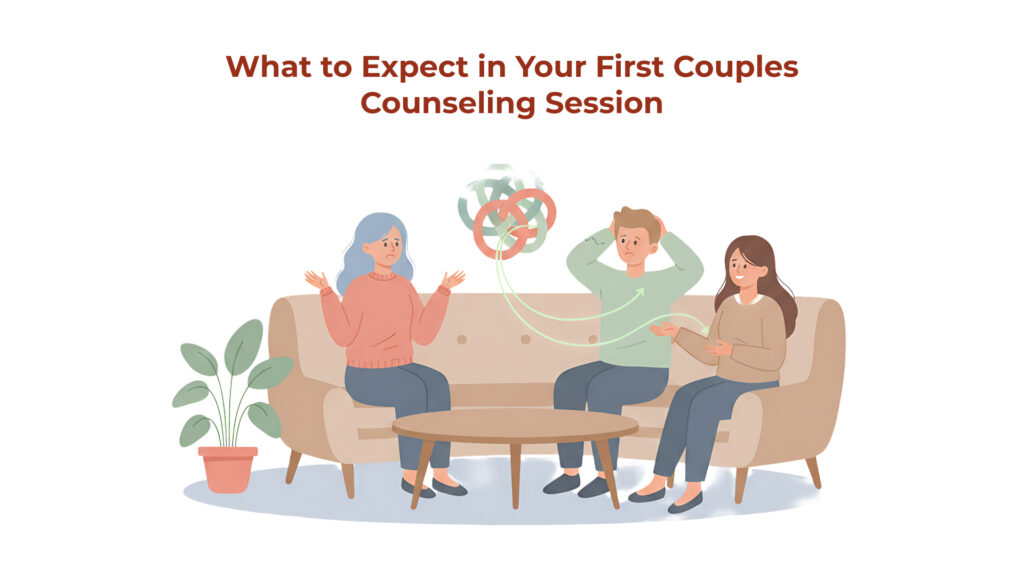
Feeling Nervous About Your First Couples Counseling Session Is Normal
Almost every couple feels uneasy before starting. Anxiety often comes from fear of judgment or loss of control. Many worry the therapist may take sides or allow arguments to spiral. Others fear the conversation may reopen wounds that feel hard to manage.
Those concerns are common during starting couples counseling. Therapy anxiety does not mean the relationship is failing. It usually means both people care enough to seek support, even when the process feels unfamiliar and uncomfortable.
What Is the Purpose of the First Couples Counseling Session?
The first meeting does not aim to fix everything. Change takes time, and this session focuses on understanding rather than solutions. The therapist listens, observes, and gathers context about the relationship.
During this stage, the goal is to identify concerns, notice patterns, and set a shared direction. A respectful foundation matters more than quick answers, because safety allows honest communication to begin.
What Happens Before the Session Begins
Before the conversation starts, you usually complete intake forms. These include basic background details, relationship history, and current concerns. This information helps the therapist prepare without making assumptions.
After that, consent and confidentiality are explained clearly. The therapist outlines how sessions work, what privacy looks like, and how boundaries are maintained. This step often feels rushed elsewhere, yet it plays a key role in trust.
Step-by-Step: What Happens During Your First Session
The main part of the first couples counseling session follows a clear structure. While each therapist has a style, the flow stays focused on balance, clarity, and safety.
Meeting the Therapist and Setting Ground Rules
The session usually begins with introductions and expectations. The therapist explains their neutral role and clarifies how respectful dialogue is maintained. Interruptions, raised voices, or personal attacks are addressed early.
This structure creates a sense of control. Knowing that escalation will be managed helps both partners feel safer when sharing sensitive thoughts.
Sharing What Brought You to Counseling
Each person gets space to explain their view of the relationship concerns. The therapist guides the conversation so both voices receive equal attention. One partner does not dominate while the other fades into silence.
Blame-focused language is gently redirected. The goal is to understand experiences rather than decide who is right or wrong during the couples therapy process.
Identifying Patterns, Not Assigning Fault
At this point, the therapist looks for recurring cycles. These may include how conflict starts, how each person reacts, and how resolution often fails. The focus stays on patterns, not personal flaws.
Understanding triggers and responses helps couples see the relationship from a wider angle. Counseling works with dynamics because progress comes from awareness, not winners.
Clarifying Goals for Counseling
Later in the session, attention shifts to goals. These may include short-term relief or long-term changes. Some goals belong to the relationship, while others reflect individual needs.
Clear goals guide future sessions. They help the therapist choose methods and help couples measure whether progress feels meaningful over time.
What the Therapist Is (and Is Not) Doing
Many fears fade once roles become clear. The therapist does not take sides or judge choices. They do not force decisions about staying together or separating.
Instead, the therapist acts as a guide. They support communication, highlight patterns, and encourage understanding without acting like a referee or authority figure.
How to Prepare for Your First Couples Counseling Session
Preparation does not mean rehearsing speeches. It helps to reflect on what feels difficult and what you hope may improve. Honesty matters more than saying the right words.
Avoid planning arguments or collecting evidence. When you prepare for couples counseling with openness, the session feels more natural and productive. Managing expectations also helps, since progress builds over time.
What Happens After the First Session
After the session ends, the therapist may share initial impressions. These include recommendations, session frequency, or areas to focus on next. Some couples receive gentle reflection exercises.
Progress is usually measured through changes in communication and awareness. Improvement often appears gradually, not all at once, which keeps expectations realistic.
What If One Partner Feels Hesitant or Unsure?
Mixed motivation happens often. One partner may feel ready, while the other feels cautious. Therapy can still help, even with different comfort levels.
Therapists work carefully with hesitation. They acknowledge concerns and move at a pace that respects both people, which often builds trust over time.
First Sessions Are About Understanding, Not Judgment
The first meeting centers on safety and clarity. No one is labeled or blamed. The space remains neutral and supportive throughout the process.
Taking this step often brings relief. Knowing what to expect in your first couples counseling session can make starting couples counseling feel more manageable and less intimidating.
Frequently Asked Questions:
Will the therapist take sides in couples counseling?
No, the therapist stays neutral and focuses on the relationship patterns. Their role supports balance and understanding rather than choosing one partner over the other.
Do couples argue during the first session?
Some disagreement may arise, but the therapist manages the conversation. Ground rules help keep discussions respectful and prevent arguments from escalating.
How long is a first couples counseling session?
Most first sessions last between fifty and ninety minutes. The extra time allows introductions, background discussion, and goal setting without feeling rushed.
Is it normal to feel worse after the first session?
Yes, emotional reactions can surface after opening up. This response often reflects awareness rather than harm and usually settles with continued support.
Can couples counseling help if only one partner wants it?
Yes, counseling can still be helpful. Therapists work with different motivation levels and often help hesitant partners feel more comfortable over time.
Conclusion
The first step into couples counseling does not demand answers or decisions. It offers space to speak, listen, and understand without pressure. When expectations feel clear, the process becomes less overwhelming and more supportive for both partners.