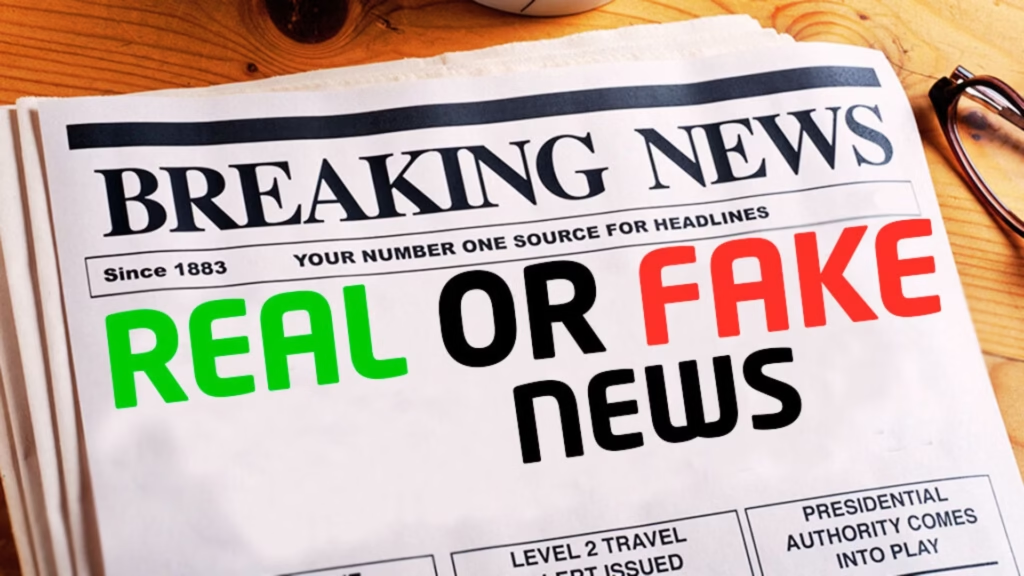
In today’s world, news spreads faster than ever. While this helps people stay informed, it also makes it easy for fake news to circulate. Fake news is false or misleading information presented as real news. Real news, on the other hand, is accurate, verified, and trustworthy. Knowing the difference is important for staying informed and avoiding mistakes. This article explains how to identify fake news versus real news in simple English.
What Is Fake News?
Fake news is information that is intentionally false, misleading, or exaggerated. It may look like a real news article but is not based on facts. Fake news can spread through social media, websites, and sometimes even traditional media.
Common Types of Fake News
- Clickbait headlines: Designed to get clicks rather than provide facts
- Misleading information: Facts are twisted or taken out of context
- Hoaxes and rumors: False stories that sound believable
- Propaganda: Information meant to influence opinions or beliefs
Fake news can cause confusion, panic, or even harm public trust.
What Is Real News?
Real news is based on verified facts, reported by trained journalists, and follows ethical standards. Real news provides reliable information to help people understand events and make decisions.
Features of Real News
- Follows verified facts
- Uses credible sources
- Includes multiple perspectives
- Avoids exaggeration or bias
Real news can appear on newspapers, TV channels, reputable websites, and reliable news platforms.
Key Differences Between Fake News and Real News
| Feature | Fake News | Real News |
| Accuracy | Often false or misleading | Verified and fact-checked |
| Source | Unknown, unreliable | Credible, established sources |
| Purpose | To mislead, create clicks, or spread rumors | To inform and educate the public |
| Headline | Sensational or clickbait | Clear, factual, and relevant |
| Evidence | Little or no evidence | Supported by facts and data |
Understanding these differences helps people identify trustworthy information quickly.
You Can Also Read: types-of-news-local-national-international
How to Identify Fake News
Here are simple ways to spot fake news:
1. Check the Source
- Look at the website or publication.
- Trusted news organizations usually have professional websites and clear editorial policies.
- Avoid unknown or suspicious websites.
2. Read Beyond Headlines
- Fake news often uses dramatic headlines to grab attention.
- Always read the full article before forming an opinion.
3. Look for Evidence
- Real news provides sources, quotes, statistics, or documents.
- Fake news often lacks proof or cites unknown “experts.”
4. Check the Author
- Real news articles usually have the journalist’s name.
- Search for the author to verify credibility.
5. Cross-Check with Other Sources
- Compare the story with other reputable news platforms.
- If multiple credible sources report the same information, it is more likely real.
6. Check Dates and Context
- Fake news sometimes recycles old events to mislead readers.
- Verify dates and check the context of events.
7. Beware of Emotional Manipulation
- Fake news often tries to make you angry, scared, or excited.
- Real news focuses on facts, not emotions.
Role of Social Media
Social media spreads both real and fake news quickly. While platforms like Facebook, Twitter, or Instagram can inform, they can also mislead. To avoid fake news on social media:
- Verify before sharing
- Follow official accounts of news organizations
- Avoid clicking on suspicious links
Why Real News Matters
Real news helps people make informed decisions, understand world events, and participate in society responsibly. Fake news, on the other hand, can mislead, create fear, and even harm communities. Being able to distinguish between fake and real news is an essential skill in the modern world.
Platforms like Duel Du Quinte show how verified information and reliable updates can provide trustworthy news about sports and events, helping users stay informed without falling for false stories.
Tips for Staying Safe from Fake News
- Always verify before sharing anything online.
- Educate yourself on news literacy.
- Use fact-checking websites like Snopes or FactCheck.org.
- Stay skeptical of sensational claims.
- Follow reputable news sources for your daily updates.
By practicing these habits, you can enjoy news safely and avoid spreading misinformation.
Final Thoughts
Learning how to identify fake news versus real news is important in today’s fast-paced information world. Checking sources, verifying facts, and staying critical can save you from being misled. Real news informs, educates, and helps people make better decisions, while fake news misleads and creates confusion.
By being careful and using reliable platforms like Duel Du Quinte for verified updates, you can stay informed, safe, and confident in your knowledge of current events.